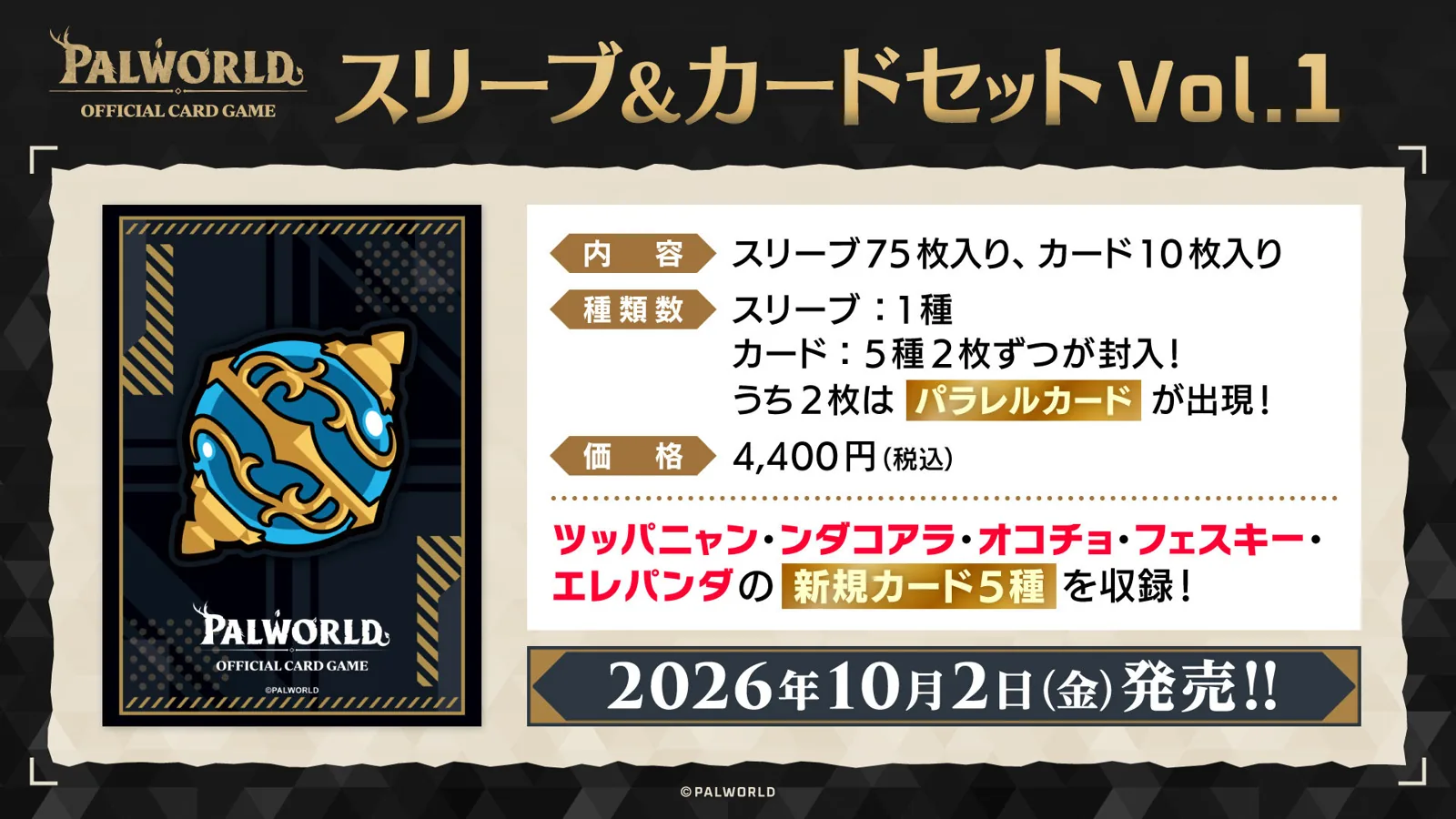
SS01 parallel cards: pull rate, look and value
Every SS01 box contains exactly 2 parallel cards out of the 10 cards inside, and which two are parallel is random — so 8 of your 10 cards are base printings and any of the five card types can arrive foil.
Updated for the current Palworld patch
- ✓What does an SS01 parallel look like?
- ✓Is the parallel rate really 2 in 10?
- ✓How many boxes to complete a full parallel set?
- ✓Will parallels hold value?
What does an SS01 parallel look like?
The parallel printing replaces the base card's white ink-wash background with a full-colour treatment in the card's own colour, and the surface carries a reflective foil finish that shifts as you tilt the card. The gallery in this guide reproduces that tilt so you can compare base and parallel side by side.
Is the parallel rate really 2 in 10?
That is what the official product art states: of the 10 enclosed cards, 2 are parallel. It is a guaranteed count rather than a random rate, so every single box yields a pair of foils — the variable is only which cards they are.
How many boxes to complete a full parallel set?
Because the two parallels are drawn from five card types, completing all five parallels takes multiple boxes and, statistically, usually more than three. Buying singles is normally the cheaper route once the secondary market settles.
Will parallels hold value?
Accessory-set cards historically trade higher than booster commons because the print run is tied to accessory stock rather than a booster reprint cycle. Track actual movement on /prices and the benchmark on /tcg-price-index instead of trusting launch-week asking prices.
How should I store the parallels?
Sleeve them immediately — the foil surface scuffs faster than the base matte finish — and keep them in a top loader or the binder pages on /collection rather than mixed loose with playset cards.
Official English product page: contents, release date and card count.